Most wellbeing programs get forgotten by Monday. This one doesn't.
Because it's not built for the training room.
It's built for the moment the pressure is actually on when your senior manager shuts down in a high-stakes meeting, when even your high performers start buckling under the pressure, when your most reliable person starts making avoidable mistakes.
Nadia spent six years inside HR at ACCIONA, supporting people and performance through three company mergers in infrastructure and construction. She watched capable people deteriorate under pressure again and again.
She left to build the intervention she couldn't find: one that changes behaviour when the pressure is actually on, not in a training room when everything feels manageable.
Nadia trains teams to stay calm under pressure, perform at their best and support their mental wellbeing, using practical emotional regulation and mental performance tools grounded in nervous system and neuroscience research.
This is a complete wellbeing and performance solution for your workplace.

As of 1 December 2025, addressing staff wellbeing has shifted from a best practice recommendation to a legal responsibility under WorkSafe's new psychosocial regulations.
Right now, 1 in 2 Australian workers report high burnout, according to Beyond Blue’s 2025 survey. Burnout slows execution, clouds decision making and increases mistakes. When burnout runs its course and someone leaves, replacing them costs between $24,000 and $120,000 per person, depending on their salary.
On the other hand:
Employees with high well-being are 6.2x more engaged at work (based on the 2024 Workforce Trends Report by Gallagher Insurance)
Engagement is one of the biggest predictors of discretionary effort, productivity and performance.
High engagement links directly with productivity gains and profit growth across multiple studies.
The new legislation reinforces what we already know: wellbeing initiatives must deliver results. It’s no longer enough to rely on an EAP or a once a year "R U OK? Day".
Organisations need practical, evidence-based solutions that create measurable impact and enable people to bring their whole selves to work.
You’re seeing it every day
Your senior manager snaps at their team.
Your team members have become quiet and are taking less initiative
Your once reliable team member has been taking more sick days than usual & started making silly mistakes.
This is a capacity issue, not a character flaw.
When stress isn't managed well, execution slows, errors increase, and communication breaks down.
Innovation stalls because when people are pushed past their capacity, they are managing what feels like a threat to their system, rather than thinking strategically.
Capacity is how much pressure a person can hold while still thinking clearly and following through.
When capacity is high, people make better decisions under stress, recover quickly and bring others with them.
When capacity is exceeded, execution slows, communication breaks down, and even capable people start making avoidable mistakes.
Every goal on your org chart is only as strong as the capacity of the people delivering it.
That's where Nadia comes in
After 6 years in HR, including supporting three company mergers, Nadia saw the same pattern repeatedly.
Capable people, strong on paper, struggling to hold up under sustained pressure.
Most corporate approaches addressed the surface. They ticked a box, but didn’t change how people actually operated day to day.
That’s where her work comes in.
Nadia moved into coaching to focus on what holds in real conditions, not ideal ones. Over the past 6 years, she has worked with individuals and teams to build the capacity to stay clear, steady, and effective as pressure increases.
There’s a difference between understanding the tools and being able to use them when it matters.
Her experience across both environments is what closes that gap.
What People Are Saying
-
“Nadia helped the team understand the real reasons capable people hesitate. Simple practices became practical enablers of momentum. A timely and energising session that left the team inspired and better equipped to take action.”
— Marina Vinichuk, Head of Digital, Arc’teryx
-
“We saw a clear change in engagement and psychological safety. Teams were more open, more supportive, and more aware of how stress was showing up in their work. The tools were actually applied long after the workshops.”
— Elle Griffiths, Co-Owner, Two Styles Interior
-
“Everyone in the team absolutely loved the sessions. Nadia connected wellness and performance in a way that was so well suited to our high-pressure business culture.”
— Natalie Rogers, Practice Lead, FMCG + Consumer Goods Marketing
Here’s what it’s actually costing you
The patterns you're seeing aren't isolated and the numbers back it up.
Poor workplace mental health costs Australian businesses an estimated $39 billion a year. It shows up as lost productivity, turnover and sliding engagement, with only 16% of employees fully engaged.
You lose your high performers first:
Nadia watched this play out over and over throughout her HR career. A high performer goes above and beyond, quietly picks up more work, grows increasingly frustrated and exhausted, and by the time anyone realises, they're handing in their resignation.
Replacing them costs up to 1.5 times their annual salary in recruitment, onboarding and lost productivity, while projects stall and teams have to start again.² The corporate knowledge, client relationships and team stability that walk out with them can't be replaced with a job ad.
What it costs directly:
When someone goes off work for mental health, they're away about five times longer than for a physical injury. Each claim costs around $55,300, plus months of lost capacity.
Sick leave alone averages $4,025 per employee, per year.
For a small team of five earning around $80,000 each, that easily exceeds $140,000 a year in sick leave, productivity loss, turnover risk and claim exposure.
For the people who stay, the impact shows up more quietly, running on fumes, redoing work after miscommunication, avoiding hard conversations while small issues snowball.
In the background, psychological safety erodes slowly, then all at once.
You're already paying for this. The question is whether you keep absorbing the cost or put preventive measures in place so the bill stops climbing.
A HR justification can also be provided.
¹ PwC, Creating a Mentally Healthy Workplace: Return on Investment Analysis, 2014 ² Australian HR Institute (AHRI) ³ Safe Work Australia, Key Work Health and Safety Statistics Australia 2024
$55.3K
average cost per mental health claim
$39B
Annual cost of burnout to Australian businesses
6.2x
more engaged when wellbeing is prioritised
5x
longer off work for mental health vs physical injury
This shift gives you leverage
The same psychosocial regulations that increase your risk also give you leverage.
They've raised the bar.
Regulators now expect evidence that people engage, behaviour shifts and risks actually reduce.
You can't tick a box anymore, you need something that has evidence it works.
This creates permission to invest in real capacity building, not just token compliance.
While many organisations default to low effort solutions, another EAP, another training module no one remembers, you can take a different path.
Think: building teams who stay calm under pressure, regulate their emotions and perform better because they've been trained for what the job actually demands.
Capacity gives you people who don't just survive stress, they use it.
Teams who communicate instead of shutting down, managers who lead through pressure instead of cracking under it and an organisation that retains its high performers because they feel genuinely supported, not just surveyed.
This is the difference between meeting your obligations and gaining a competitive advantage.
Most wellbeing programs give people information. This gives them capability.
There are three ways to bring this to your organisation, depending on what your team needs and how deeply you want to embed the change.
For the most comprehensive experience, Nadia recommends starting with the in-person workshop that’s best suited to your team’s needs, then getting the team to use the online program for 8 weeks post-workshop and closing the process with a Flowst8 movement session to integrate everything learned.
Flowst8’s movement training is specifically designed for mental performance and emotional balance.
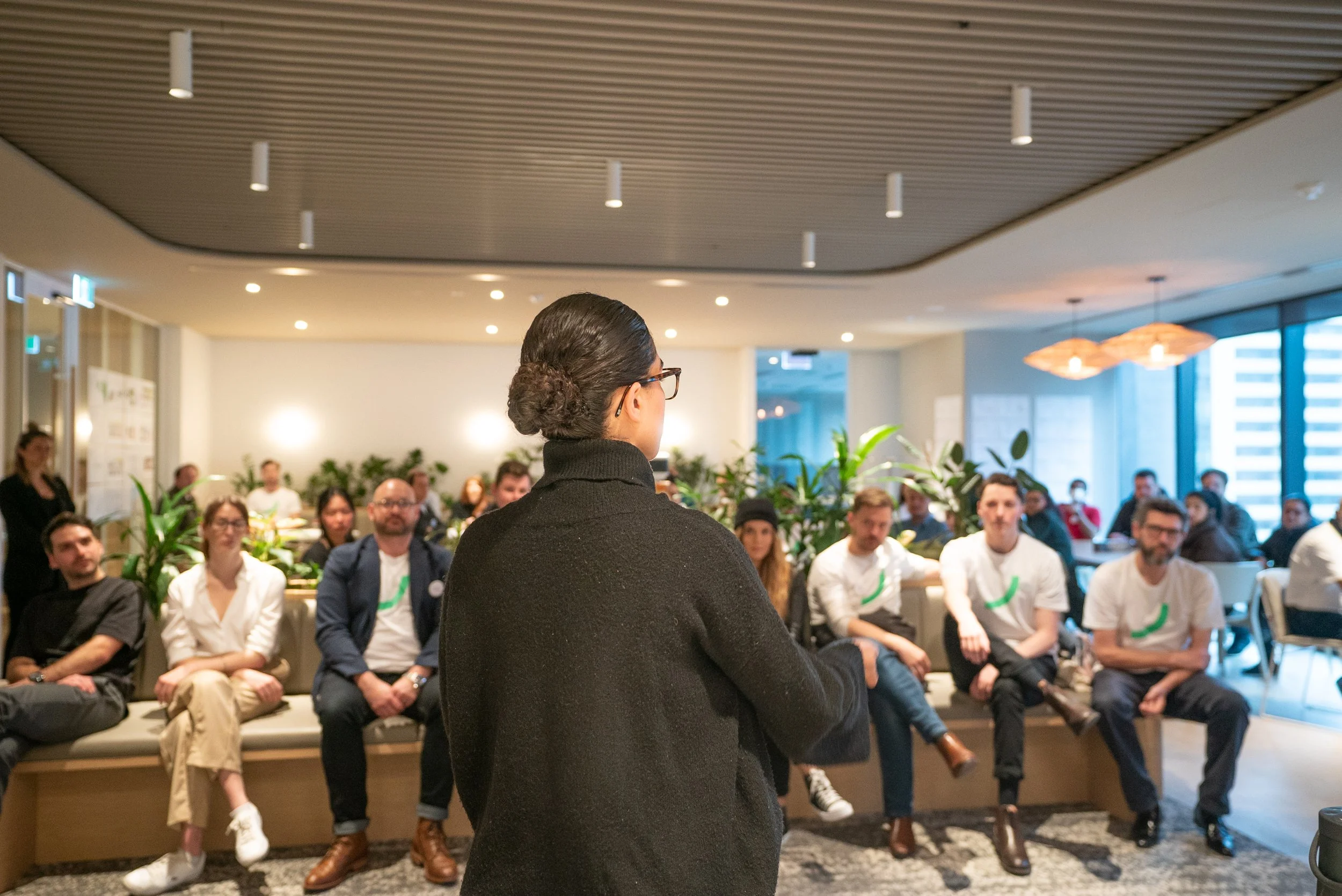
Workshop 1: Creating Capacity to Thrive
Your team learns to:
Understand their stress patterns – what drives stress, what their emotions are signalling and how to recognise their own patterns under pressure
Process and manage emotion so they can choose how they respond, rather than feeling overwhelmed, shutting down or rushing through what's in front of them
Practical solutions that take less than 10 minutes - building the capacity to stay calm, respond strategically and access focus when it matters most, using simple tools they can rely on day to day.
Best for: Teams experiencing high stress, change fatigue, or early disengagement.
Calm, clear and in control.
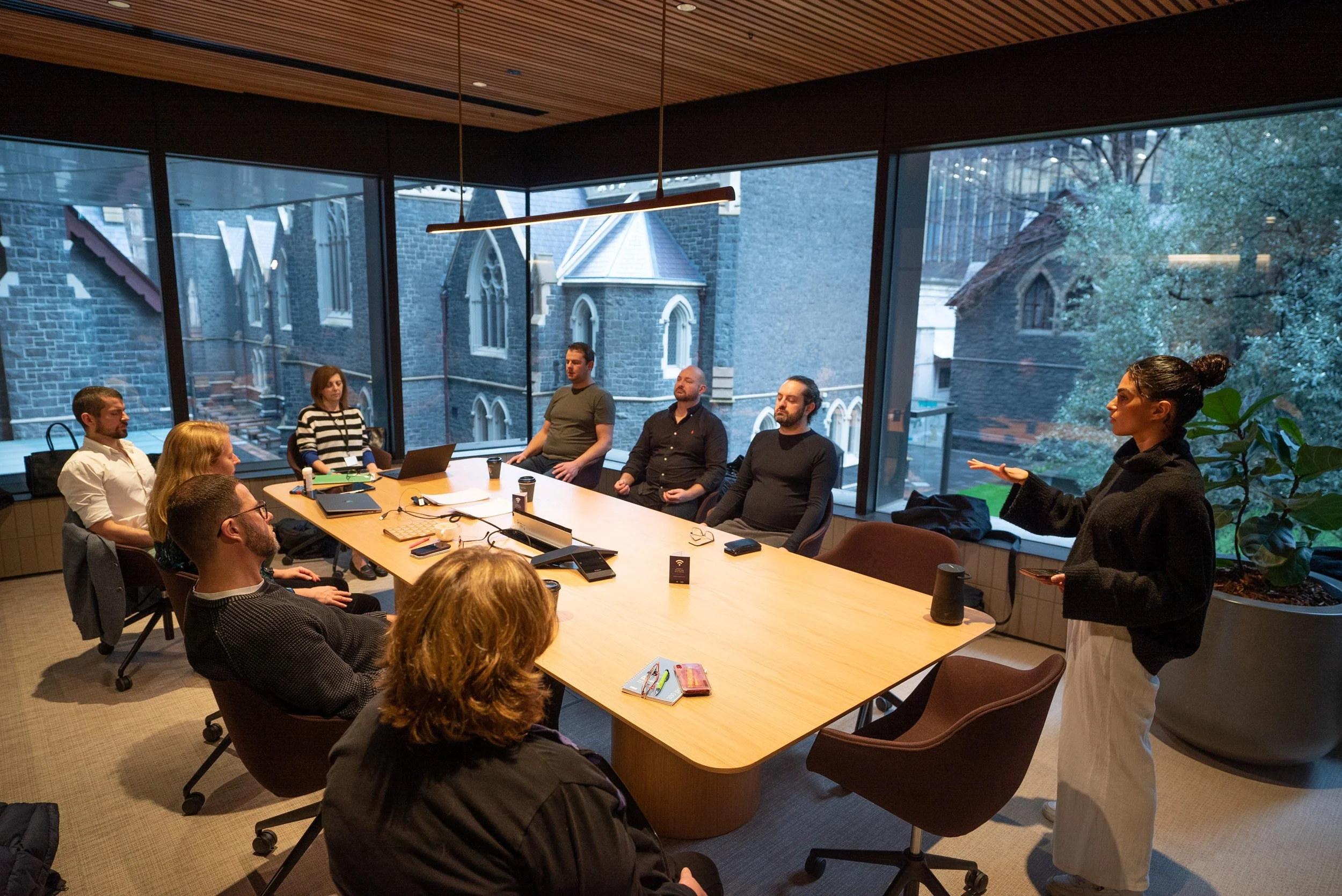
Workshop 2: Creating Capacity for High Performance
Your team learns:
What actually drives presence and concentration & how to train it like a skill.
Manage time strategically, structure their days, meetings and workflows for focus and momentum, not just firefighting
What’s happening in your brain when execution breaks down and how to fix it.
Improve work design in line with the new regulations, not just more "resilience" training, but actual structural changes to how work happens
Best for: High performing teams, leadership groups, and organisations with ambitious targets.
Together, these workshops address both the person and the system, giving you lasting change, not just a temporary fix.
Focus, flow and momentum.
Traditional exercise programs treat fitness and mental wellbeing as separate.
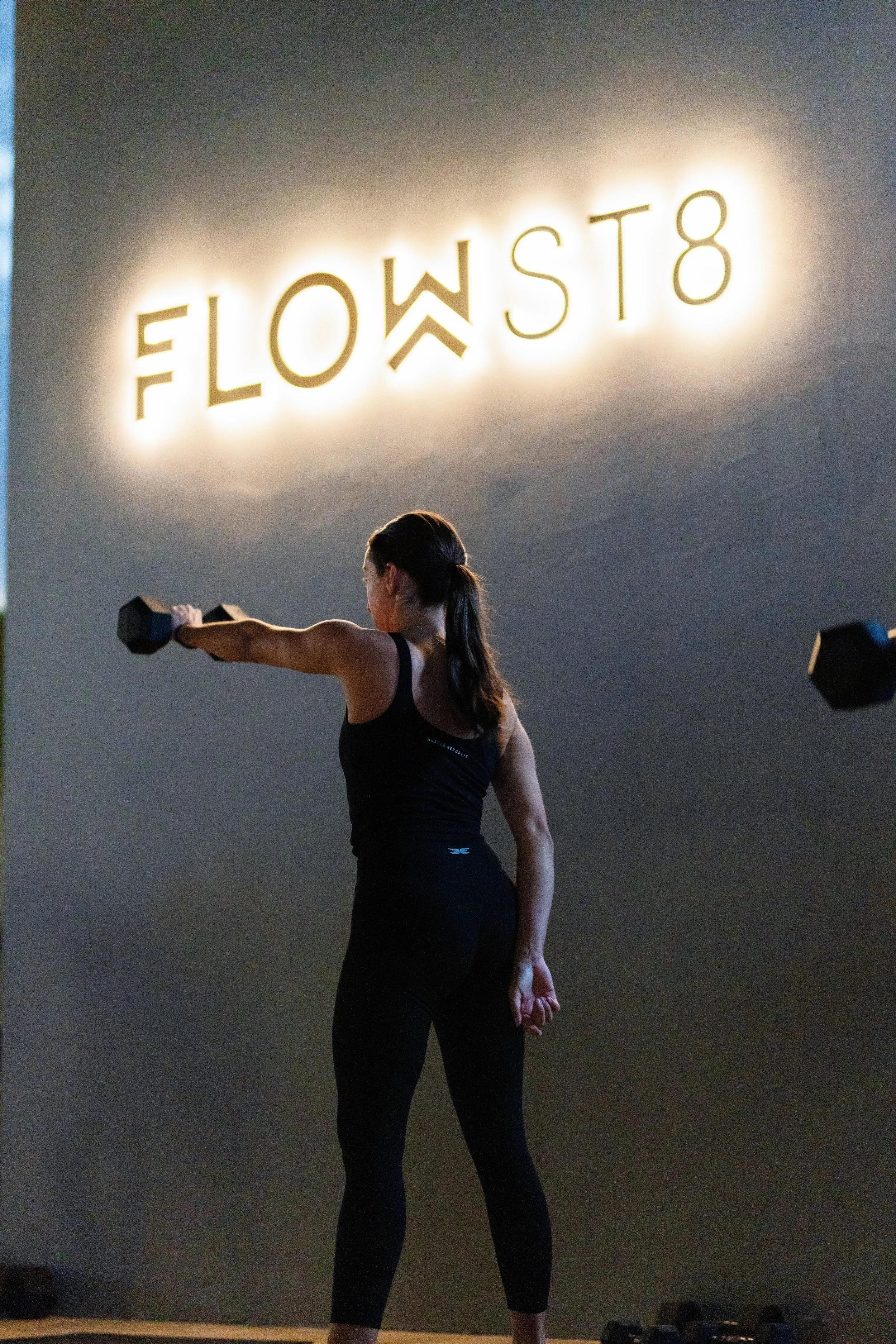
FlowST8 integrates them. It's a mixed modality system that regulates the nervous system while building physical capacity.
Instead of high-intensity workouts that compound workplace stress, FlowST8 blends strength, conditioning, mobility, breathwork and recovery into one practice designed to support mental clarity, emotional regulation and sustainable performance.
Sessions run in-studio or on-site at your offices.
FlowST8 Movement Training
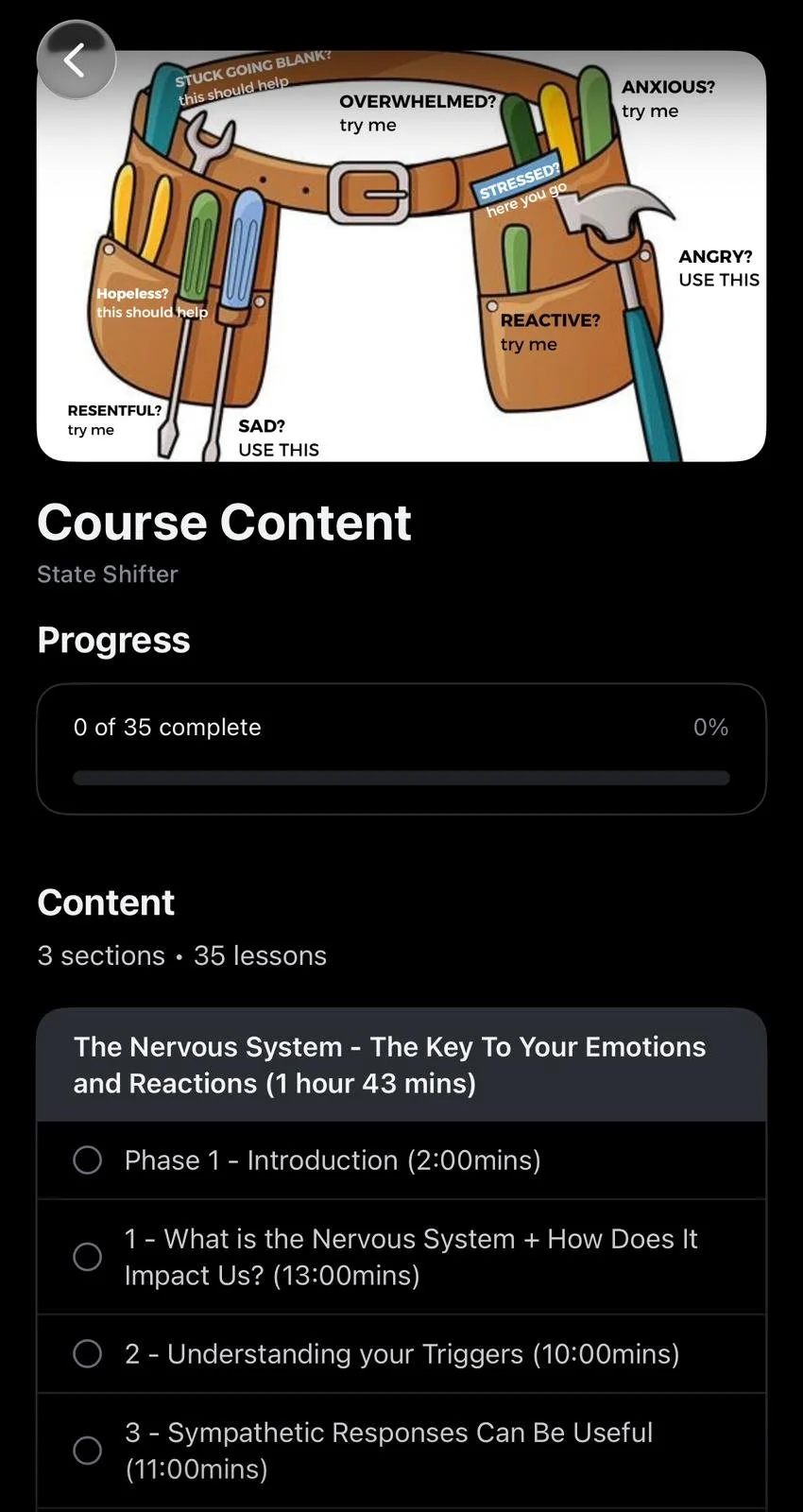
Teaching your team to master their emotional state and reactions in minutes, anytime, anywhere.
• 27+ modules, between 5-20 minutes each
• Extensive practical tool library your team can use in real time
• Supports integration of workshops for a deeper level of change.
• Self-paced, accessible on any device, recommended pacing. 15-minutes 3 times a week for a total of 8 weeks.
State Shifter Digital Program
What actually changes
INDIVIDUAL
People stay composed under pressure instead of reacting.
They make better decisions during stress, recover faster from setbacks and communicate more effectively, especially in conflict.
They carry higher workloads without breaking down.
TEAM
Psychological safety improves because people actually speak up, ask for clarity and flag problems early.
Interpersonal tension drops, conflict becomes more constructive and communication gets clearer.
ORGANISATION
Unplanned absenteeism falls as stress related sick days decrease, turnover drops because people feel supported and engaged, and mental health claims reduce through proactive intervention, while productivity and culture strengthens.
Psychosocial obligations are met with clear, practical evidence and not just policy on paper.
$1.50 - $4.00 return for every $1 invested
in evidence based workplace mental health interventions (SafeWork NSW)
For the team of five we mentioned earlier, reducing just one mental health claim ($55,300) and cutting sick leave by 20% pays for this several times over.
Your high performers stop leaving.
Your managers stop burning out.
Your teams stop avoiding the hard conversations.
That’s what capacity gives you.

Meet Nadia
Nadia comes to this work from both sides: six years in Human Resources at ACCIONA (formerly Geotech) in infrastructure and construction, managing performance issues, supporting teams through three company mergers and rolling out programs.
Ultimately, she left HR to build work that changes behaviour when pressure is high.
Her qualifications include:
Bachelor's in Psychology (minor in HR), Swinburne University
Performance Neuroscience Certified Coach
Oxygen Advantage Certified Breathwork Facilitator
Trained at The Coaching Institute
Mentored in Functional Health
She's been delivering corporate workshops for five years and coaching for over seven, combining HR experience with performance science.
That means understanding safety and performance pressures, keeping a room engaged and making nervous system science straightforward for busy teams who need tools they can use immediately, not theories they'll forget by Monday.
Bring this to your organisation
If you're dealing with stress-related performance issues, turnover or teams that shut down under pressure, or want to get ahead before this becomes a problem in your growing organisation, this solution is built for you.
Running either or both workshops for your team:
1) The Creating Capacity to Thrive Workshop (wellbeing and regulation focused)
2) Creating Capacity for High Performance Workshop (focus, flow and efficiency focused)
Package 1: Workshops
Package 2: Workshops + FlowST8
Combine one or both workshops with FlowST8 movement training for the complete mind and body solution. Sessions run in-studio (Glen Iris) or on-site at your offices.
Add On: State Shifter Digital Program
Add phone and web app-based modules to either package. Short, practical tools your team can use in real time, which expand upon what has been learned through the workshops and create deeper integration.
